MAINTENANCE OF THE SAINT ENDRÉOL GOLF COURSE
Golf & Spa Resort - Provence Côte d'Azur France
THE EXPERTISE THAT BRINGS THE COURSE TO LIFE
THE COURSE MANAGER AND HIS TEAM
Jean-Luc Boulat, who has been in charge of maintaining the Saint Endréol course for 18 years, is a passionate course manager and nature lover. His commitment to the environment is reflected in every decision he makes and in his day-to-day management of the course, where he strives to combine quality of play with respect for nature.
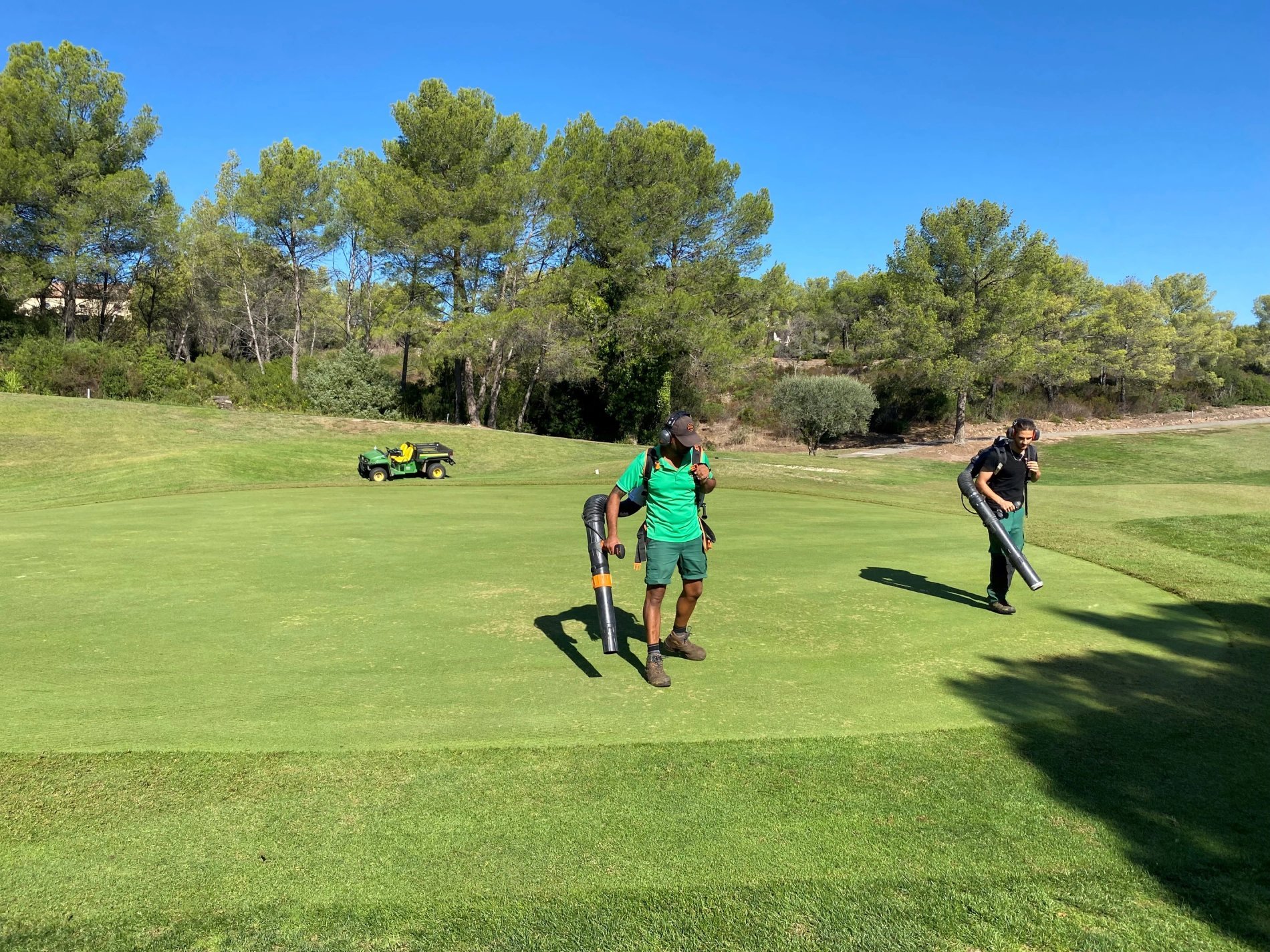
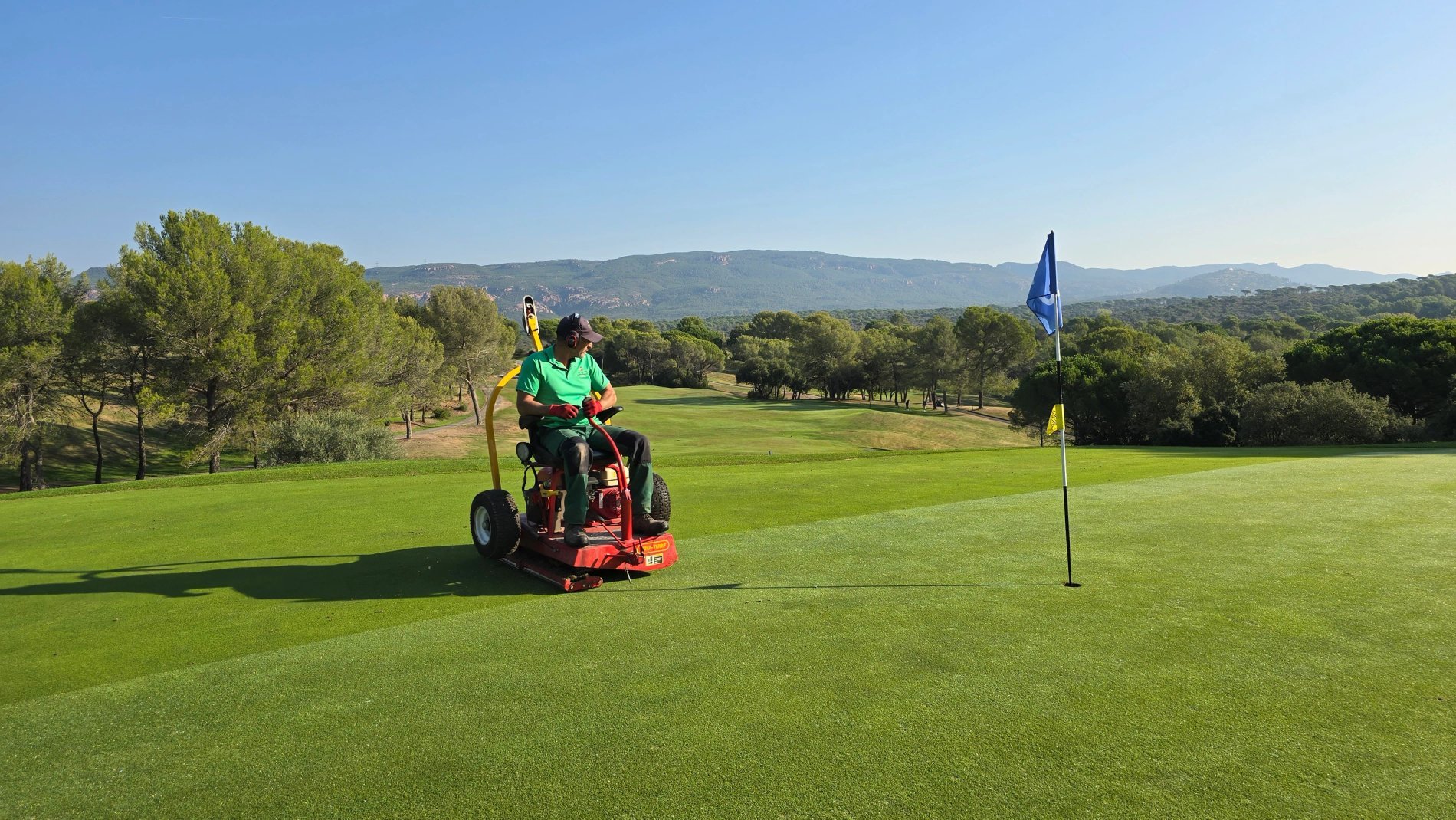
He is supported by a team of 10 people who share his commitment and professionalism. Together, they carry out the complete maintenance of the golf course, from the greens to the fairways, with rigour and precision, ensuring a healthy, harmonious and enjoyable course for all golfers.
MORE HEALTHY AND SUSTAINABLE MAINTENANCE
INPUT MANAGEMENT
For several years now, the course manager has been working to gradually reduce the use of plant protection products in favour of biocontrol products of national or European origin for course maintenance. The goal for the future is to completely eliminate plant protection products.
Glyphosate, formerly used for weeding electric fences, bunkers, edges and golf cart tracks, has been completely abandoned. Selective weeding has been greatly reduced and then eliminated on all playing surfaces. Similarly, the use of fungicides has been stopped on tees and fairways, and then on greens.
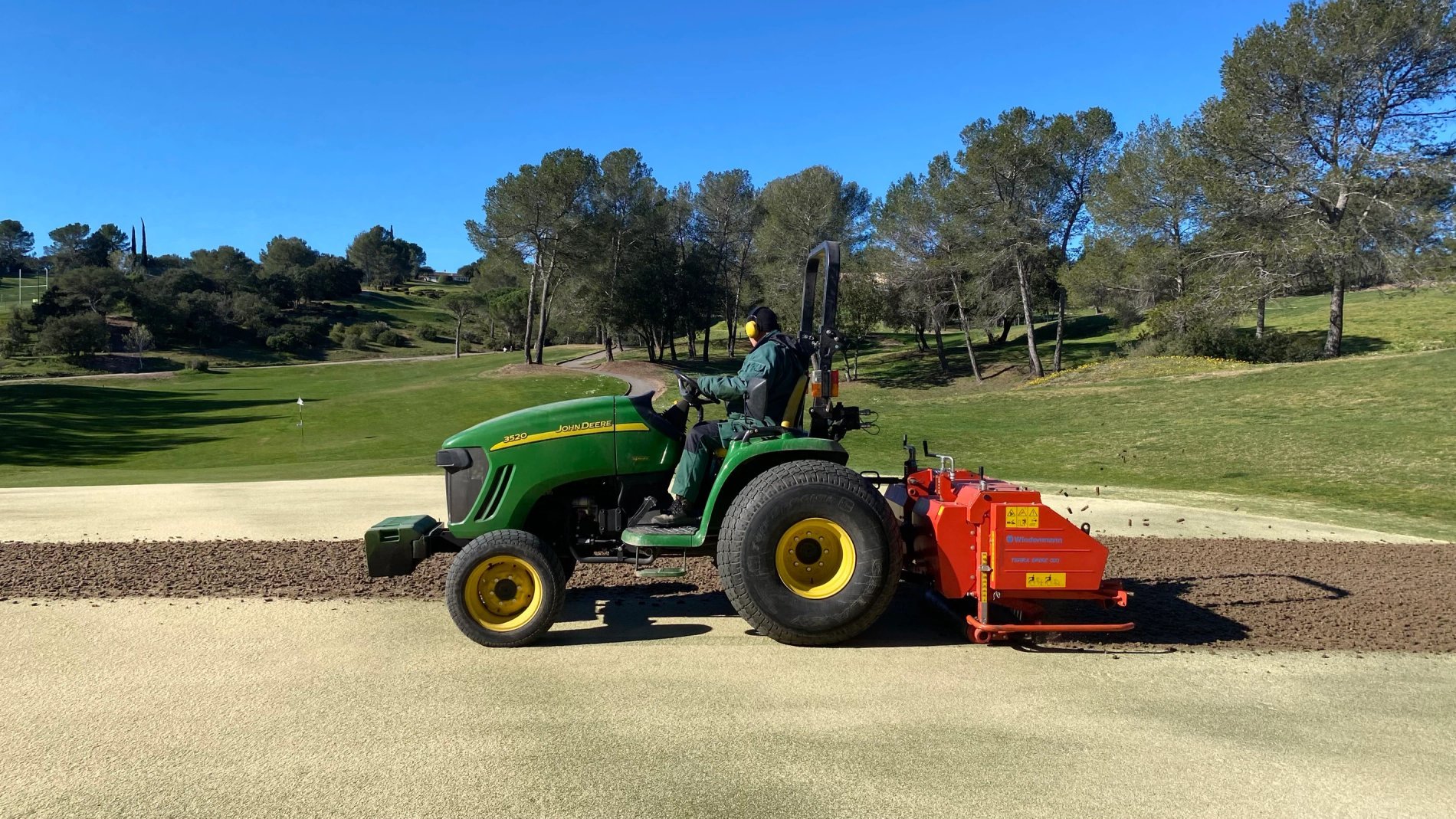
However, these ambitious choices are not without consequences. To maintain the quality of the surfaces and the health of the turf, they require the development of more demanding and environmentally friendly mechanical work: verticutting, aeration of different diameters or with blades, reseeding and sanding. These interventions make it possible to control thatch — a layer of accumulated plant debris — and thus limit areas conducive to the development of disease.
GREEN ONSET
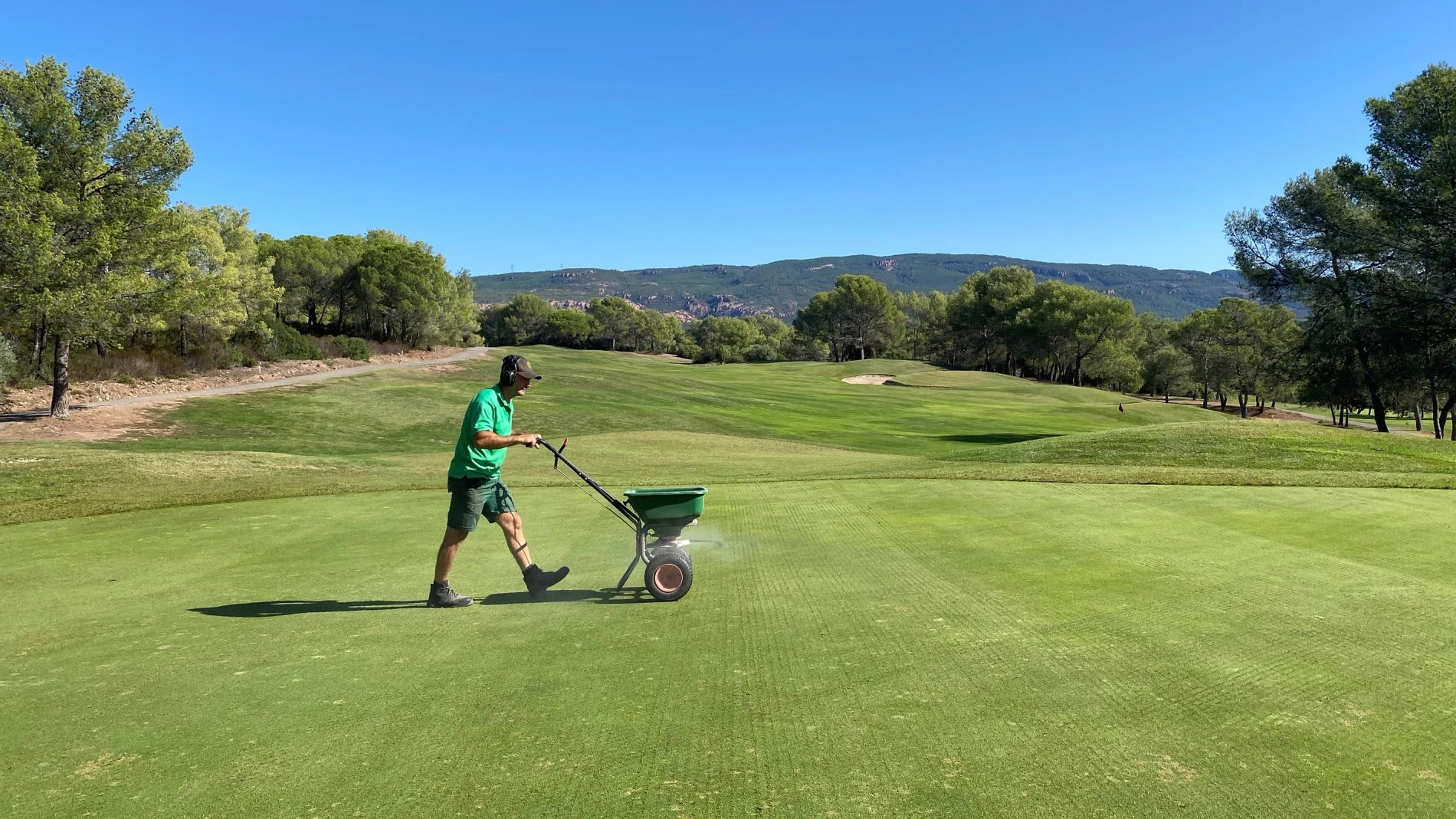
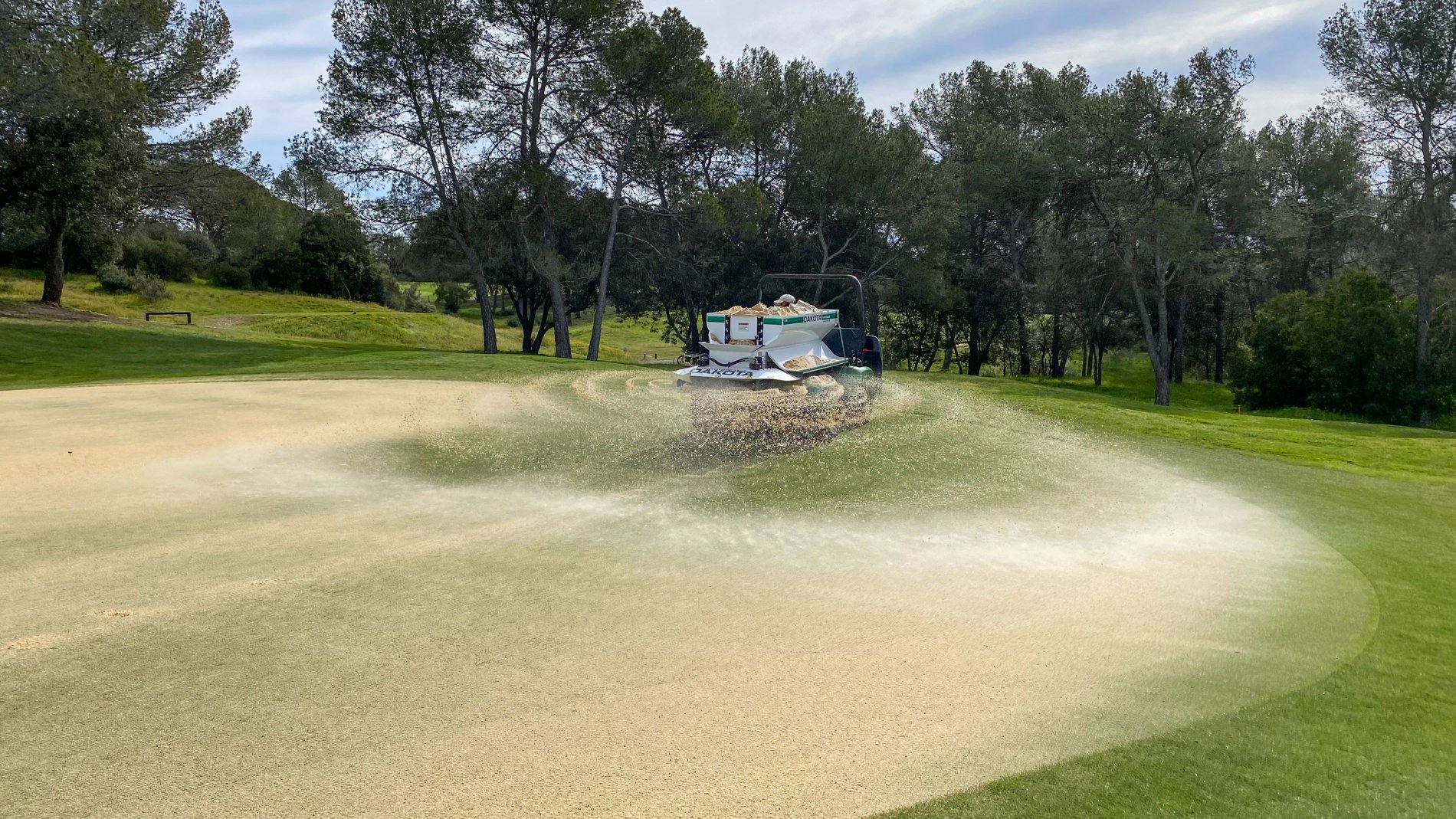
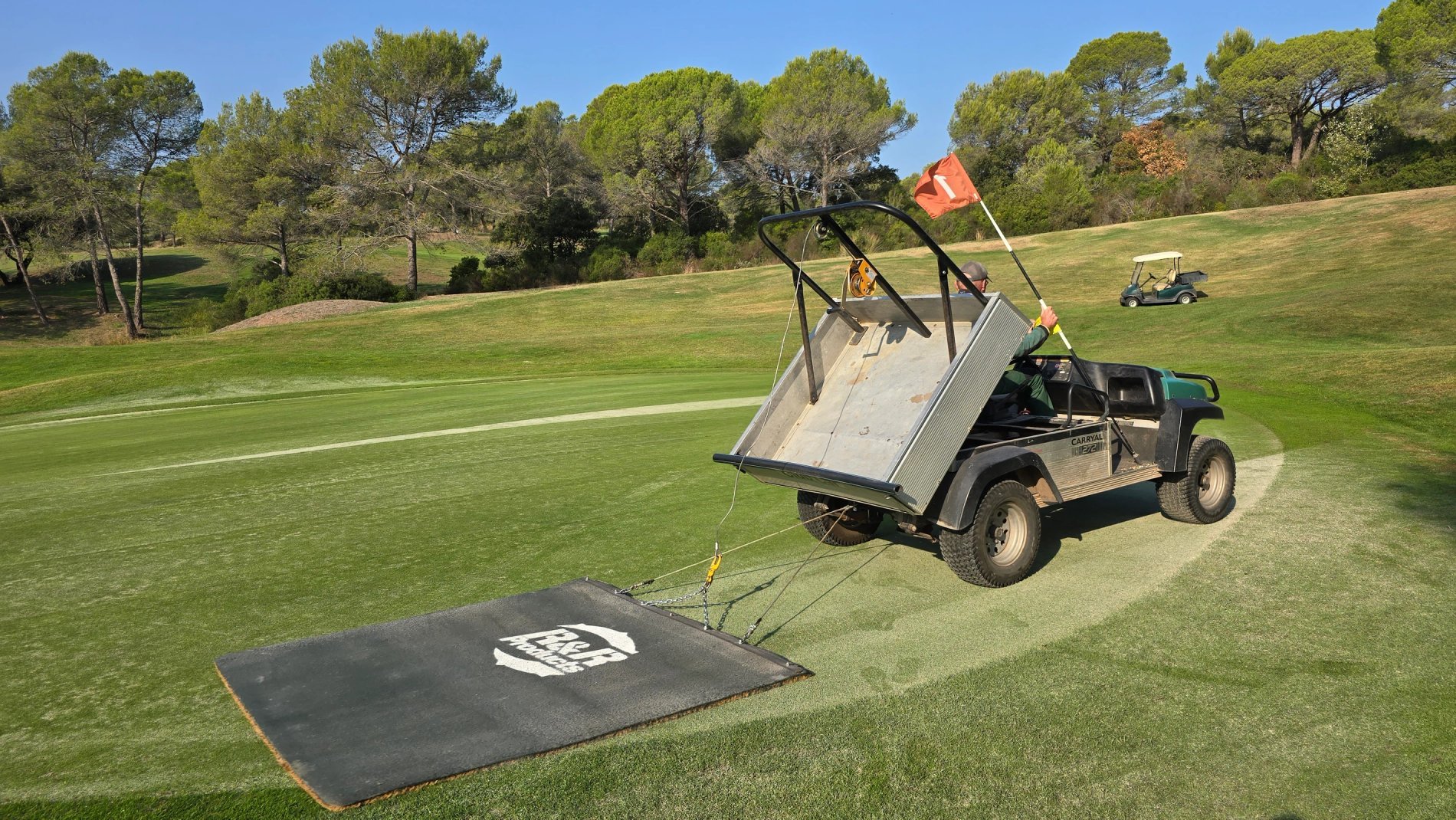
Several times during the growing season, the course team resets the greens. During this operation, new varieties of grass are planted to prevent the onset of disease and thus avoid the use of pesticides. This mixture of grasses is able to germinate quickly and at low temperatures at the end of the season. The aim of this work is to reverse the flora, i.e. to modify the composition of the turf to make it more resistant to diseases such as dollar spot. In addition to its environmental benefits, this eco-responsible approach improves the quality of play on the greens in the long term. Overseeding involves several steps, carried out after mowing.
CONSISTS OF SOWING A MIXTURE OF SELECTED GRASSES USING A POINTED TOOL THAT INSERT THE SEEDS INTO THE SOIL TO PROMOTE UNIFORM GREEN REGROWTH.
APPLICATION OF A MICROBIAL BIOSTIMULANT TO PROTECT SEEDS AND PROMOTE THEIR GROWTH
APPLYING A THIN LAYER OF SAND TO THE GREENS TO FILL THE PERFORATIONS
ALLOWS SAND TO PENETRATE THE AERATION HOLES AND EVEN OUT THE SURFACE OF THE GREENS
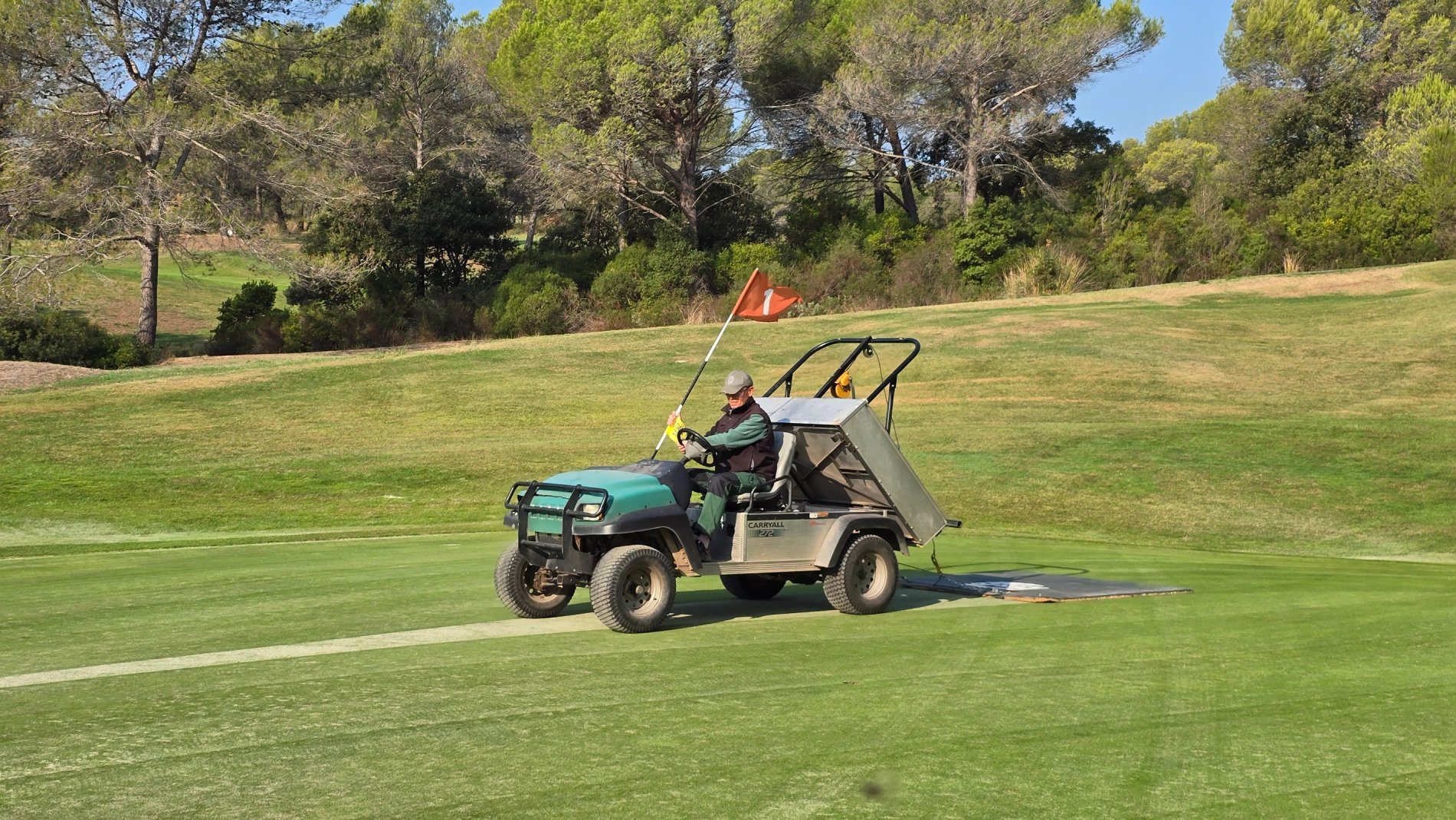
ALLOWS YOU TO SMOOTH THE SURFACE OF THE GREENS, IMPROVE THEIR FLATNESS AND RESTORE A CONSISTENT PLAYING SPEED.
MORE DETAILED MAINTENANCE
The significant reduction in the use of phytosanitary control products in favour of biocontrol products also requires greater vigilance and more thorough maintenance of play areas:
- Use of yeasts, fungi, bacteria and microorganisms that antagonise pathogens in the soil
- Spraying with paraffin oil or talcum powder to create a protective or drying layer, limiting the development of mycelia
- Strengthening of the grass blade through the addition of natural plant substances (willow, horsetail, comfrey, seaweed extracts, etc.) or minerals (sulphur, iron, trace elements)
- Control of fertiliser inputs for regular fertilisation without excess
- More precise irrigation control
- Increased mowing height on greens: reduces stress and increases photosynthesis
Regular reseeding of greens to renew flora and establish newer, more disease-resistant varieties.
THE CHALLENGE OF ENVIRONMENTALLY RESPONSIBLE MANAGEMENT
One of the major challenges of eco-responsible golf course management is the control of certain diseases, including dollar spot. This fungal disease affects turfgrass and manifests as small circular spots ranging from yellowish to light brown in colour. It mainly appears in warm, humid weather and primarily affects heavily used playing areas such as greens.
On a course that aims to eliminate the use of plant protection products, turf diseases are no longer controlled by curative chemical treatments. Dollar spot is therefore more visible and can take hold more easily. This phenomenon is a direct consequence of a more environmentally friendly management approach that prioritises the natural balance of the soil and turf. This approach involves accepting and managing certain diseases differently, rather than eliminating them.
The fight against dollar spot requires a comprehensive and preventive approach. Microorganisms such as antagonistic bacteria and fungi are applied to curb the activity of pathogenic fungi. In addition, biostimulants are used to treat visible stigmata on greens and promote turf regeneration. This approach allows for the reintroduction of more resistant grasses, capable of gradually renewing the vegetation cover and filling in areas affected by the disease. Sanding, combined with the application of biostimulants, creates conditions conducive to seed germination and uniform turf recovery.
These actions help to limit the spread of the disease, reduce its visual impact and maintain optimal playing quality, while remaining faithful to sustainable and responsible course management.
ZERO PESTICIDE TARGET
A SUSTAINABLE CHOICE FOR THE COURSE AND ITS USERS
By favouring organic and natural solutions, the golf course is taking concrete action to protect the planet, promoting the development of rich and balanced biodiversity.
This approach has direct benefits for the health of both gardeners and golfers, who enjoy a healthier environment without exposure to harmful chemicals. The use of organic products avoids the constraints associated with chemical treatments, such as mandatory course closures of up to 48 hours. The golf course remains accessible to players, while maintaining a high level of quality and playability.
Opting for environmentally friendly maintenance means choosing a lively, sustainable and high-performance course, where the pleasure of the game is fully combined with respect for nature and human health.
Discover also
.svg.svg?svgCleanup=1&size=md&colorize=currentColor)